How to Choose Between Roller Chains and Leaf Chains
2026-08-11

1. Fundamental Difference First
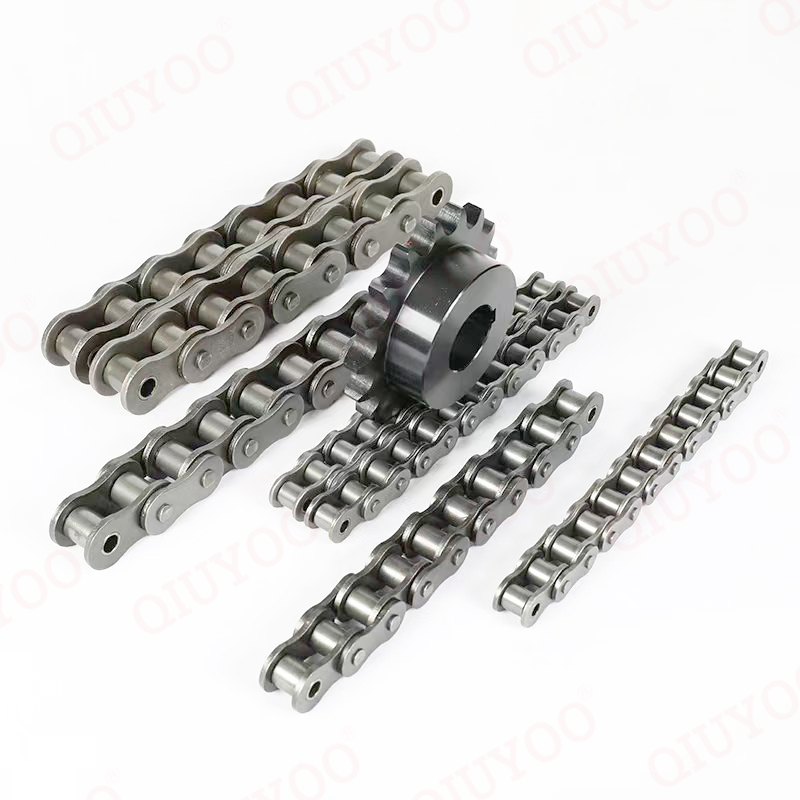
Roller chain
Function: Power transmission between rotating shafts Engages with toothed sprockets for continuous rotary motion. Structure: Inner plates, outer plates, bushings, rollers, pins.
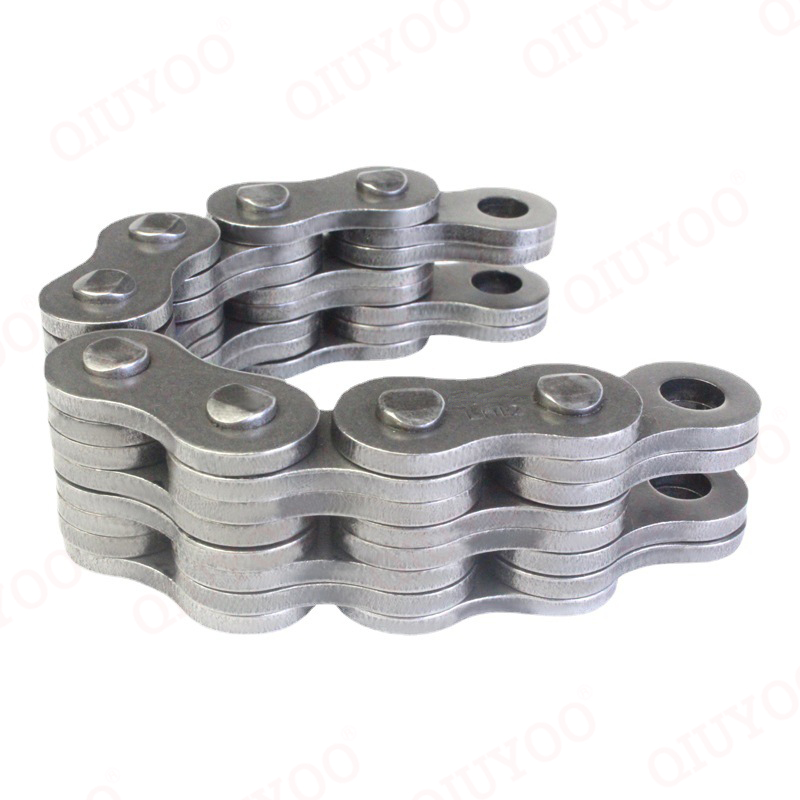
Leaf chain (leaf chain / balance chain)
Function: Load lifting, tension, counterweight (pure tensile load) Works with smooth sheaves (grooved pulleys), NOT toothed sprockets. Structure: Stacked link plates and pins — no bushings or rollers.
2. Core Selection Criteria (Decision Guide)
✅ Choose Roller Chain if ANY below applies
- You need to transmit torque between two rotating shafts; the chain runs in an endless loop around sprockets.
- Continuous rotary operation, medium or high running speed.
- The chain meshes with toothed sprockets to drive rotation.
- Applications: conveyor drives, machinery transmission, motorcycles, packaging equipment.
Limits: Not economical for heavy lifting under pure tension; breaking load is lower than leaf chain of equivalent width.
✅ Choose Leaf Chain if ANY below applies
- The chain mainly bears straight tensile load (lifting, hoisting, counterweight).
- Motion is reciprocating linear lifting, not continuous circular rotation.
- Runs over smooth grooved sheaves (no toothed sprockets).
- Applications: forklift mast lifting chains, lift counterweights, scissor lifts, hoist balance systems.
Critical limit: Never use leaf chain on toothed sprockets for continuous rotation. Severe pin wear, overheating and sudden breakage will occur.
3. Step-by-Step Selection Workflow
Step 1: Confirm load type & motion
- Rotary power transfer → Roller chain
- Pure tension / lifting / counterweight → Leaf chain
Step 2: Check speed
- High / continuous circulating speed → Roller chain
- Low-speed reciprocating lifting → Leaf chain
Step 3: Matching wheel type
- Equipment uses toothed sprockets → Roller chain
- Equipment uses smooth grooved sheaves → Leaf chain
Step 4: Calculate required strength
-
Roller chain: Select based on transmitted power, rotational speed, centre distance, sprocket teeth number. Check allowable working load and fatigue rating. Standard series: ANSI (40, 50, 60, 80…) / ISO A-series (08A,10A,12A…)
-
Leaf chain: Select based on static & dynamic breaking load. Two main series:
- AL series (light duty)
- LH / BL series (heavy duty) Model notation example: LH1244 LH = heavy leaf chain; 12 = chain size; first 4 = number of inner plates; second 4 = number of outer plates.
Step 5: Check operating environment
- Dust, frequent lubrication access: Both work if maintained properly.
- Shock lifting loads: Leaf chain usually better for shock tension.
4. Common Mistakes to Avoid
- Do not replace leaf chain with roller chain for forklift lifting: insufficient ultimate tensile strength, safety risk.
- Do not run leaf chain on toothed sprockets for continuous rotation.
- Do not use leaf chain for high-speed circulating transmission.
Short Summary Sentence for Engineering Use
Use roller chains for rotary power transmission between sprockets. Use leaf chains for lifting, counterweight and applications under primary tensile load running over smooth sheaves.
Chain
Related Article