Types And Applications Of Angular Contact Ball Bearings
2026-06-15
What is an angular contact ball bearing?
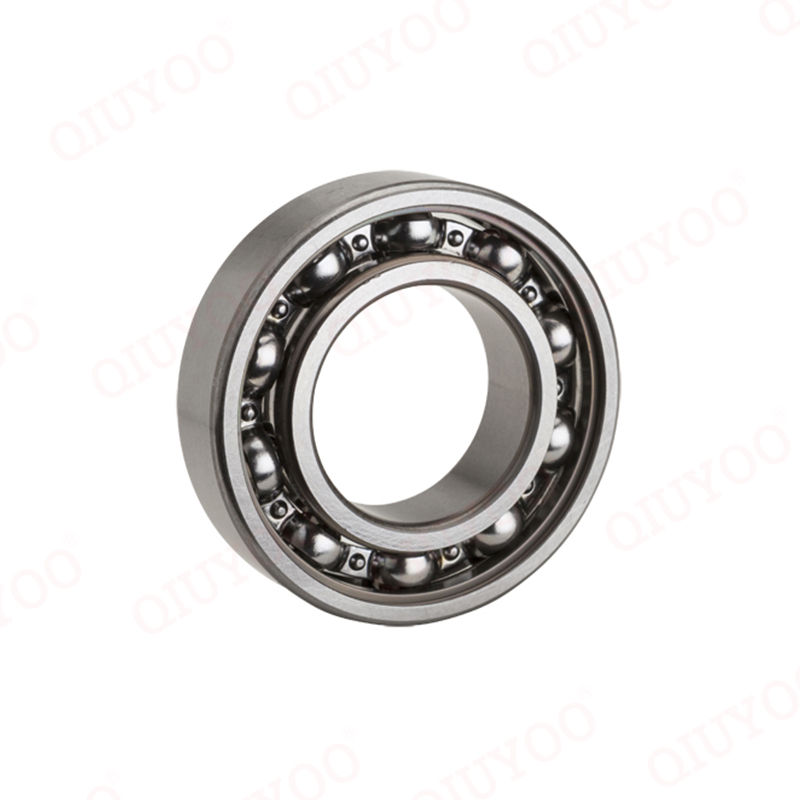
An angular contact ball bearing is a type of rolling-element bearing specifically designed to simultaneously support both radial and axial loads.
Here are the key characteristics and features of this bearing:
- Contact Angle: The defining feature of this bearing is its contact angle—the angle between the line connecting the points of contact of the ball and the raceways in the radial plane and a line perpendicular to the bearing axis. A larger contact angle provides a higher capacity for axial loads, while smaller angles (e.g., 15°) are typically used for high-speed and high-precision applications.
- Load Capacity: Because of their design, they can handle combined loads (radial and axial acting together). However, single-row angular contact ball bearings can only sustain axial load in one direction. Therefore, they are usually installed in pairs or sets to balance forces and support axial loads in both directions.
- High-Speed Performance: They operate with low friction and are capable of functioning at very high rotational speeds.
- Rigidity and Precision: When paired and preloaded (adjusted to remove internal clearance), these bearings provide excellent system rigidity and high rotational precision, making them ideal for demanding mechanical environments.
Common Applications:Due to their high precision and speed capabilities, angular contact ball bearings are widely used in equipment such as CNC machine tool spindles, high-frequency motors, centrifugal separators, gas turbines, automotive front wheels, and robotic joints.

What are the types of angular contact ball bearings?
Angular contact ball bearings can be categorized into several main types based on their internal structure, number of rows, and pairing arrangements. Understanding these variations is crucial for selecting the right bearing for a specific application:
1. Single-Row Angular Contact Ball Bearings
These are the most basic form of angular contact bearings. They feature raceways on both the inner and outer rings that are displaced relative to each other along the bearing axis.
These are the most basic form of angular contact bearings. They feature raceways on both the inner and outer rings that are displaced relative to each other along the bearing axis.
- Characteristics: They can support radial loads and axial loads in only one direction. Because they generate an axial force component when subjected to radial loads, they typically need to be paired with another bearing.
- Contact Angles: Commonly available in 15° (for high speed/precision), 25°, 30°, and 40° (for heavy axial loads).
2. Paired / Matched Single-Row Bearings
To handle bidirectional axial loads or increase load capacity, single-row bearings are manufactured and matched in sets. The three primary configurations include:
To handle bidirectional axial loads or increase load capacity, single-row bearings are manufactured and matched in sets. The three primary configurations include:
- Back-to-Back (DB): The outer ring wide faces are mounted against each other. This arrangement provides excellent rigidity and is highly effective at resisting moment (tilting) loads.
- Face-to-Face (DF): The outer ring narrow faces are mounted against each other. This setup offers less rigidity than back-to-back but is more forgiving to slight misalignments or shaft deflections.
- Tandem (DT): Both bearings are oriented in the same direction. This configuration is used exclusively when extremely high axial loads in a single direction must be supported.
3. Double-Row Angular Contact Ball Bearings
This type essentially combines two single-row bearings into a single unit with integrated inner and outer rings.
This type essentially combines two single-row bearings into a single unit with integrated inner and outer rings.
- Characteristics: They can support radial loads as well as bidirectional axial loads and moment loads simultaneously. They act similarly to a pair of back-to-back single-row bearings but occupy less axial space. They are commonly used as fixed-end bearings.
4. Four-Point Contact Ball Bearings
These are specialized single-row bearings where the inner ring is split into two parts radially.
These are specialized single-row bearings where the inner ring is split into two parts radially.
- Characteristics: A single bearing can accommodate bidirectional axial loads. They typically feature a larger contact angle (e.g., 35°), giving them a very high axial load capacity. They are ideal for applications with pure axial loads or heavy combined loads.

How to select angular contact ball bearings?
Selecting the right angular contact ball bearing requires a systematic evaluation of your application's specific operating conditions. Here is a comprehensive guide to help you make the correct choice:
1. Evaluate Load Conditions (Magnitude, Direction, and Nature)
- Load Ratio: Assess the ratio of axial load to radial load. If the application involves significant axial loads, select a larger contact angle (e.g., 25° or 30°). For applications prioritizing high speeds with lighter axial loads, a smaller contact angle (e.g., 15°) is more suitable.
- Static vs. Dynamic Loads: For bearings that are stationary, rotate very slowly (<10 r/min), or endure heavy shock loads, selection should be based on the static load rating ( �0C0 ) rather than fatigue life. This ensures the rolling elements do not suffer permanent deformation or create raceway indentations.
2. Determine Speed Requirements
- High-speed machinery demands bearings with low friction, tight tolerances, and appropriate lubrication. Smaller contact angles generally support higher rotational speeds.
- At high speeds, centrifugal forces and gyroscopic moments increase significantly. To prevent the balls from sliding and causing severe wear, heavier preloads may be required as rotational speed and radial loads increase.
3. Choose the Right Configuration (Pairing Strategy)
Since single-row bearings only handle axial load in one direction, pairing strategies are crucial for managing bidirectional loads and ensuring rigidity:
Since single-row bearings only handle axial load in one direction, pairing strategies are crucial for managing bidirectional loads and ensuring rigidity:
- Back-to-Back (DB): Offers the highest radial and axial rigidity and resistance to moment loads. Ideal for applications requiring precise angular positioning under tilting torque.
- Face-to-Face (DF): Provides less rigidity but is more tolerant to misalignment or shaft deflection.
- Tandem (DT): Used when extremely high axial load capacity is needed in a single direction. Note that two tandem pairs must be mounted oppositely on the shaft for axial stability.
4. Set the Correct Preload
Preloading eliminates internal clearance and boosts system rigidity, which is vital for precision equipment like CNC spindles.
Preloading eliminates internal clearance and boosts system rigidity, which is vital for precision equipment like CNC spindles.
- Balance is Key: Excessive preload generates heat and drastically shortens bearing life, while insufficient preload causes vibration and positional errors.
- Speed Consideration: Generally, high-speed applications require lighter preloads, whereas low-speed applications can tolerate heavier preloads. Always follow the manufacturer’s recommended values.
5. Specify Precision Grade and Materials
- Precision: For machine tool spindles and low-vibration applications, opt for high-precision grades such as ISO P4/P2 or ABEC 7/9. Keep in mind that precision ratings define dimensional tolerances but do not inherently dictate speed limits or lifespan.
- Materials: In extreme high-speed scenarios or where electrical insulation is necessary to prevent current damage, consider hybrid bearings featuring ceramic (Si3N4) balls.
6. Account for Alignment and Environment
- Angular contact bearings are highly sensitive to misalignment compared to deep groove ball bearings. Minimize shaft deflection and housing inaccuracies to extend service life.
- Factor in environmental conditions such as dust, moisture, and temperature, which will influence your choice of sealing and lubrication (oil vs. grease).
6026 Deep groove ball bearing